



I came across a paper recently that stopped me. Not because of what it proved, but because of what it suggested.
Two women, both over 45. Years of infertility. Multiple failed IVF cycles. They underwent a procedure involving mechanically processed adipose tissue and PRP injected into the ovaries.
Months later:
One conceived naturally. The other conceived through IVF and delivered a healthy baby.
If you work in the medical field like me, especially in anything related to regeneration, you already know what to do with this.
You say:
It’s a case report
There’s no control group
It could be coincidence
It requires further study
And all of that is true. But it’s not the part that interested me. What interested me was this:
What changed?
Not the patient’s age. Not their genetics. Not the diagnosis. What changed was the tissue environment.
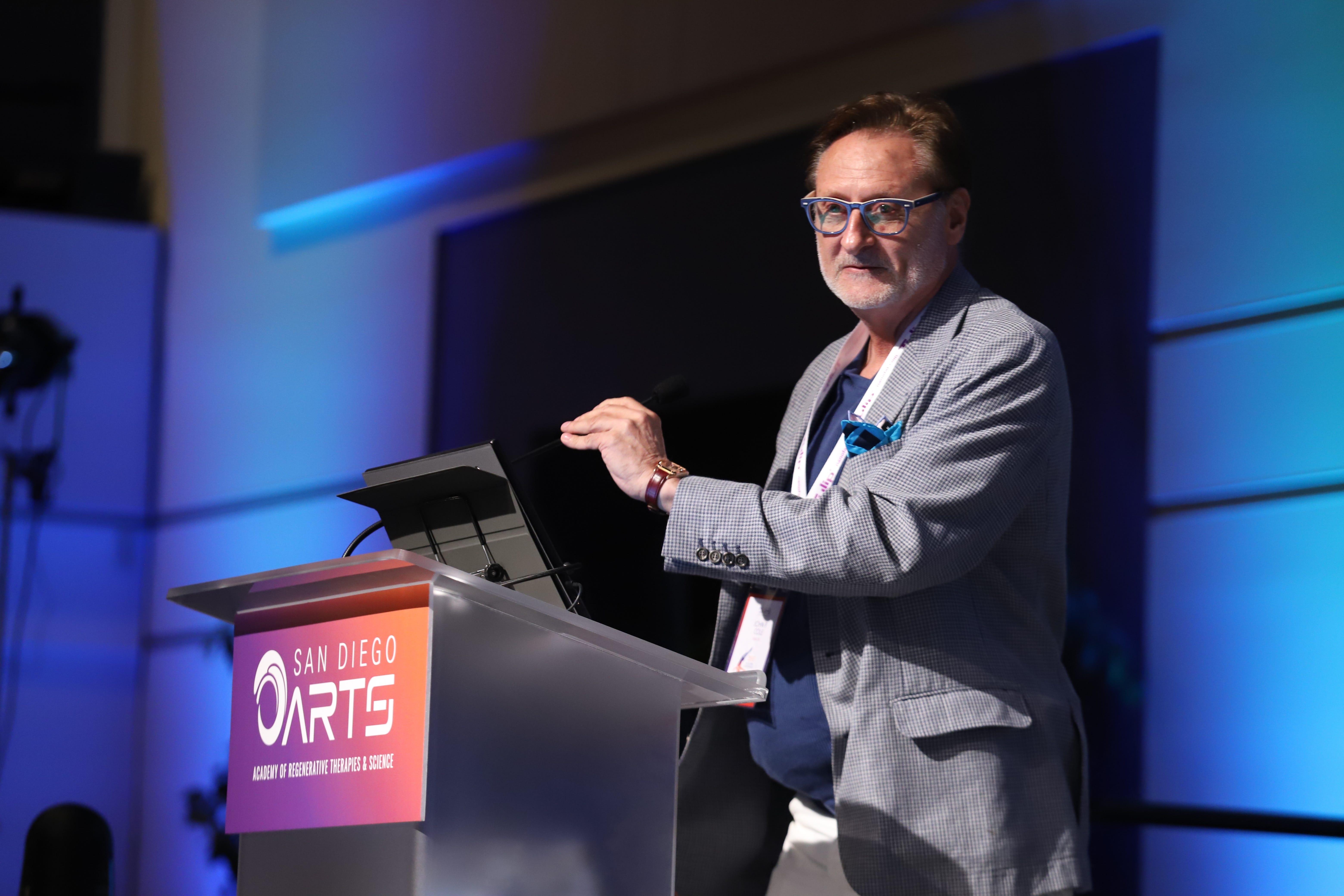
In a recent email conversation, Dr. John Cole said something that felt like it named this directly. He described the distinction between:
isolating components
preserving the full regenerative milieu
Not just cells, but:
cytokines
extracellular vesicles
extracellular matrix
and even the mechanical context
And how different approaches influence not just immediate outcomes, but long-term tissue behavior.
Dr. Cole’s language stuck with me, because it shifts the focus away from: “What are we putting in?” And toward: “What are we preserving, or disrupting, in the process?”
The authors of the paper describe mechanisms like:
angiogenesis
immune modulation
paracrine signaling
In other words, they didn’t replace anything. They altered the conditions. And something responded.
We often talk about degeneration as if something is permanently gone, lost or depleted. We talk about it as if what was there is no longer available.
That may be true in many cases. But what if, in at least some cases, that’s not entirely accurate? What if degeneration is not the absence of function, but the presence of a different pattern of tissue response?
A pattern shaped by:
time
repeated injury
incomplete restoration
accumulated scar
lack of adequate blood supply
So the natural next question is: What if that pattern isn’t fixed?
In ongoing conversations with clinicians and researchers, we keep returning to the same idea: Tissue doesn’t just receive treatment. It responds. And that response has direction: toward stability, toward fibrosis, toward something that looks more like restoration.
So when I read this paper, I didn’t see proof of a new therapy. I saw a question becoming harder to ignore: Under what conditions does tissue respond differently than we expect?
What’s interesting here isn’t that something “worked.” It’s that something that seemed unlikely…became possible. Not immediately. But over time.
That detail matters.
Because it suggests we’re not looking at an event. We’re looking at a shift in trajectory. And once you begin to see that, it becomes harder to evaluate outcomes in the same way.
Not: Did it work?
But: What direction did the tissue begin to move?
Which brings us back to John’s point. If we isolate components, we may gain precision. But we may also lose something harder to measure: the coherence of the system itself.
And if we preserve the full milieu, we may not fully control it. But we may be working more closely with how tissue actually behaves. Especially over time.
That’s not a conclusion. It’s a tension. And maybe an important one. Because across specialties – whether we’re working with joints, skin, fat, or reproductive tissue – we’re facing the same underlying question: What is the tissue doing over time?
And, can that direction be influenced?
I don’t think this paper answers that. But I do think it sharpens the question.
What if degeneration isn’t the end of the story, but a pattern over time that we haven’t fully understood yet
?
Invitation:
If this is the kind of question that feels less like something to solve and more like something to explore, the conversation will continue at the upcoming ARTS Summit, where clinicians across specialties are beginning to look at these patterns together.
If you’re noticing patterns in how tissue responds across procedures, materials, or time, I’d welcome your observations.